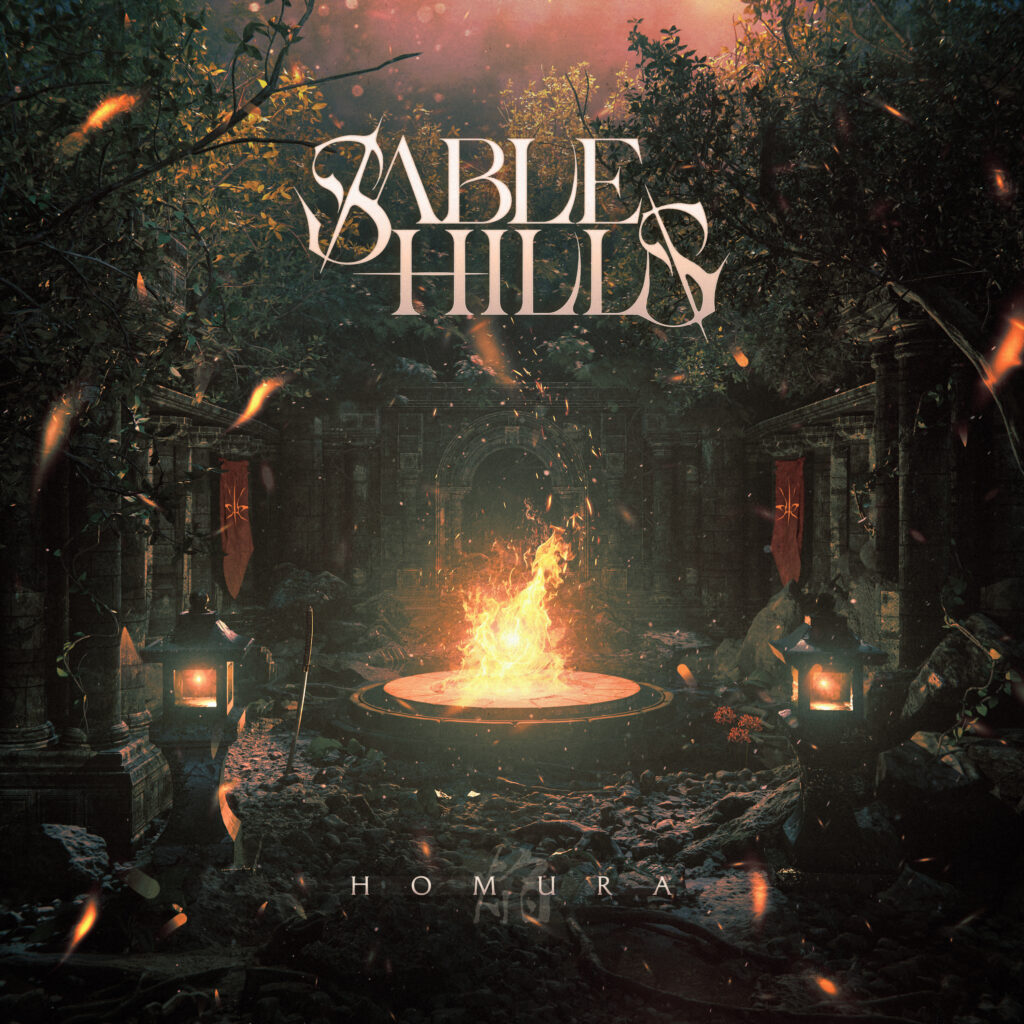
Some albums work because they know exactly where they come from and where they want to go. “Homura” by Japanese band Sable Hills is one of them. What convinced me most is the way it brings together two seemingly distant worlds: on one side, the sensibilities and influences of Japanese musical tradition; on the other, the aggressive sounds and melodic flourishes of modern metal productions. It is a combination that never feels forced and gives the album a clearly defined identity. What I particularly appreciate is the way the band handles contrasts. In “Namu” and “Higanbana“, Buddhist chants become an integral part of the compositions, adding a distinctive atmosphere to tracks that are already intense in their own right. “Godforsaken“, featuring John Henry of Darkest Hour, shifts into a higher gear, while the title track “Homura“, featuring Fuki of Unlucky Morpheus, stands out as one of the album’s most interesting moments, bringing together sheer power, melody and distinctly Japanese influences. The guitars are razor-sharp, the rhythms leave little room to catch your breath, and melodic passages break through the tension without sacrificing any of the energy. Some sections hit you straight in the gut, while others take a more atmospheric approach, revealing a more evocative side of the band’s songwriting. Everything comes together without losing cohesion or, more importantly, sounding like a collection of ideas pulled from a well-worn playbook. I wouldn’t go as far as calling “Homura” a groundbreaking album, because it isn’t, and it probably doesn’t need to be. I’d rather give it credit for something more tangible: its ability to take familiar ingredients, mix them with taste and deliver a genuinely satisfying result. Sable Hills know how to build moments of real intensity and clearly have a strong sense of direction. As far as I’m concerned, “Homura” is one of those releases that deserves much more than a casual listen.
(2026 – Arising Empire)